
Choose your scale
Where does your project sit?
The right structure depends less on how much power you need and more on who owns the asset, who signs the offtake, and what the roof or the land can carry.

Residential
1kW to 15kW
Homes, housing societies and small businesses. The 2025 net metering rules now allow systems covering your full sanctioned load, and single-phase connections finally qualify.
Residential solar
Commercial & Industrial
Rooftop, canopy and floating
Garments, heavy industry and commercial buildings. Engineering, procurement, construction and financing as one contract, with storage, carbon credits and O&M where they earn their place.
C&I solar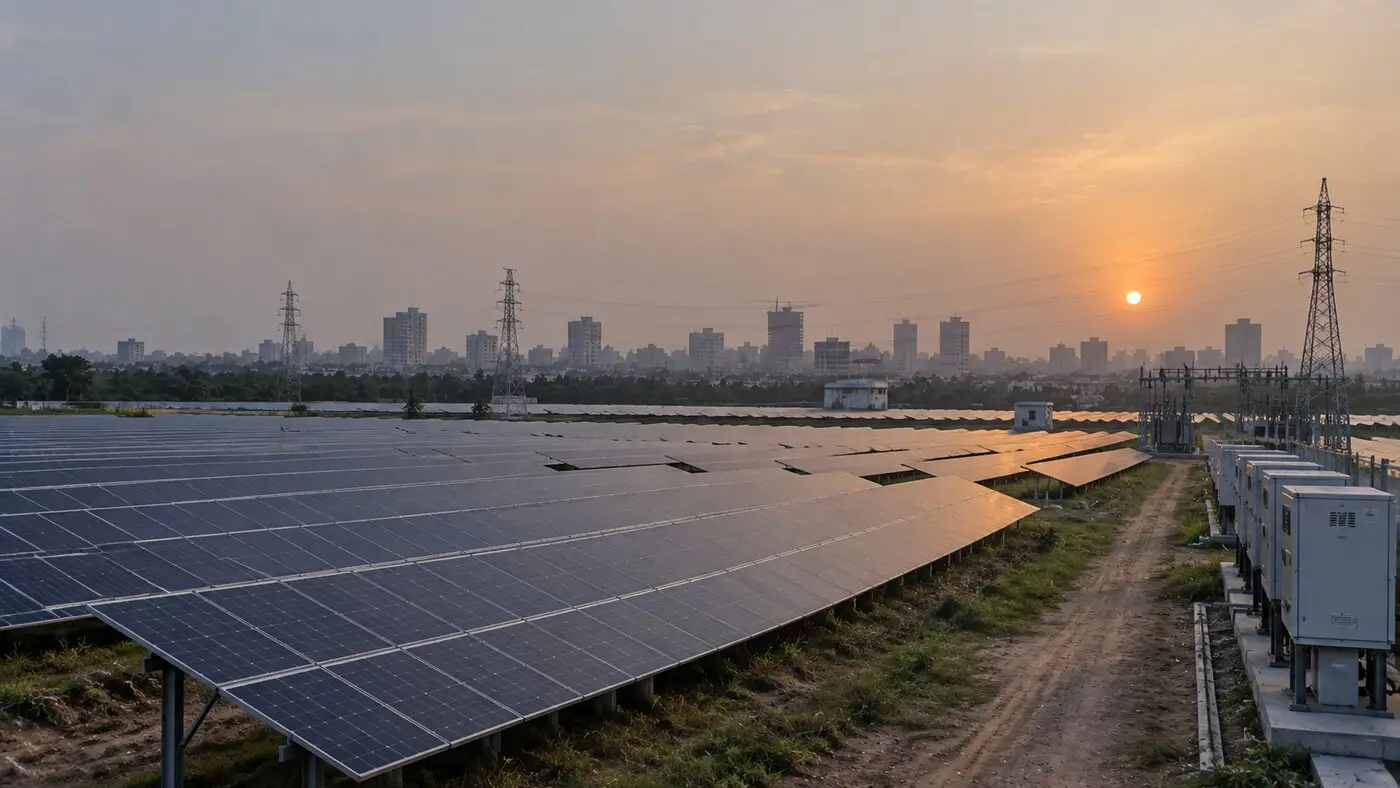
Utility Scale
Grid-connected plant
Ground-mounted and floating projects, where land, grid access and a bankable offtake decide viability. The 2025 Merchant Power Policy opened direct sale to large private buyers.
Utility scale projectsCommon to all three
What stays the same at every size
Components rated for the full 25 years
N-type bifacial modules from established manufacturers, with cables, connectors and mounting specified to the same design life. The cheap part is what fails first, and it takes the expensive part offline with it.
Documentation built for scrutiny
Whether it goes to a distribution utility for net metering or a credit committee for a facility, the drawing set, generation model and savings profile are prepared to the standard the reviewer applies. That is where most projects stall.
Compliance handled up front
Equipment checked against SREDA's approved product list, systems sized against sanctioned load, applications filed correctly the first time. Delays in this market are almost always self-inflicted.
Someone watching afterwards
Monitoring, preventive maintenance and performance audits across the asset's life. A solar plant loses output quietly, and nobody notices from the electricity bill until a lot of money has gone.
Not sure which one you are?
Send a recent electricity bill and a rough idea of your roof or land, and we will tell you what fits and what it is worth.